
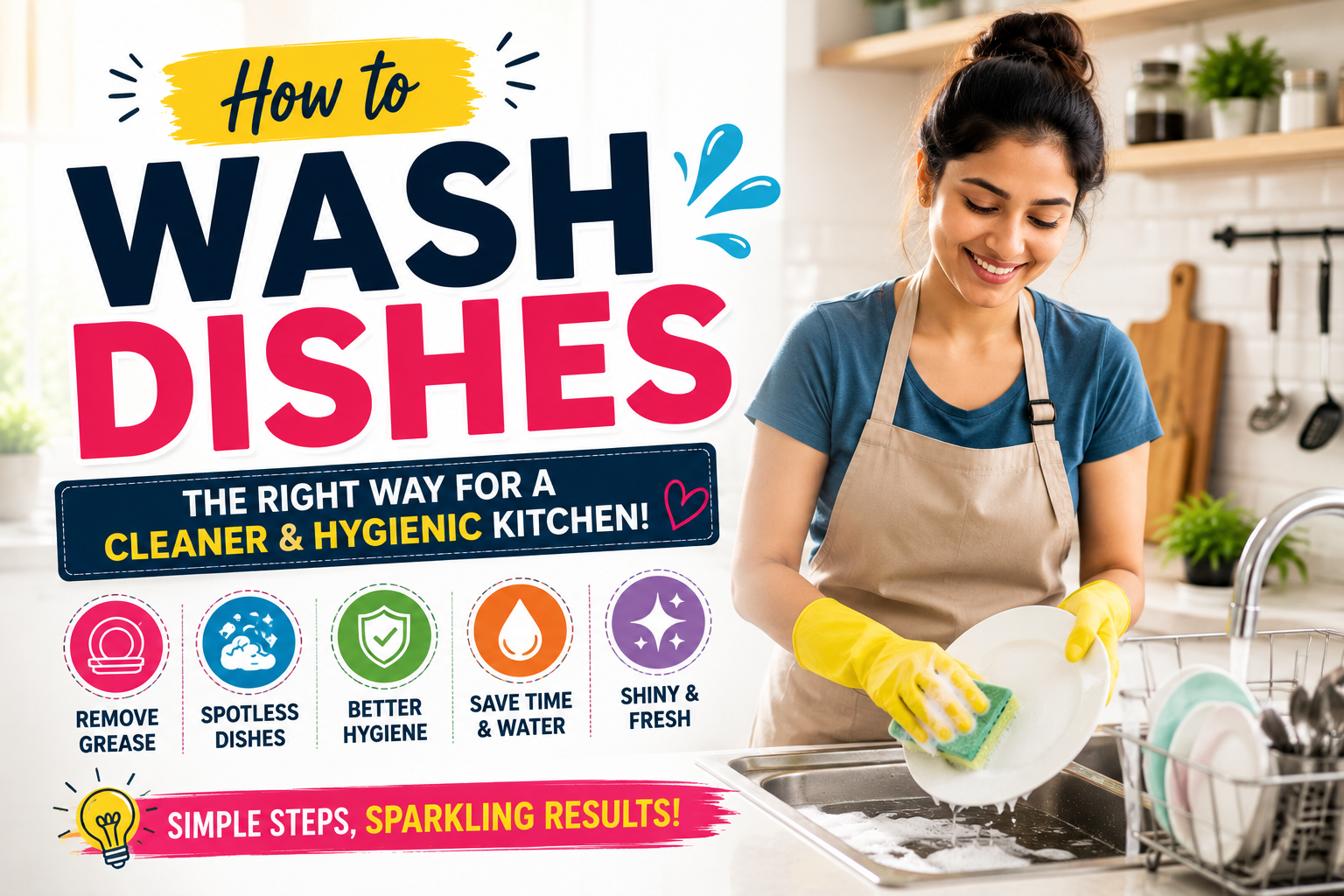
Washing the dishes may appear to be a basic task done each day in the kitchen, but there is the right way to do it to ensure the kitchen stays clean and tidy. Washing a few coffee cups in the morning or a pile of greasy cookware after dinner requires the right steps to save you time, water and effort.
A lot of people forget that it is not only the dishes which need to be cleaned, because the sink, the countertop and other kitchen surfaces get dirty with grease and water spots. A thorough kitchen cleaning procedure should involve not only washed dishes, but also clean worktops.
Even though the dishwashing liquid is meant for washing the dishes, such as plates and bowls, it will complement very well the Cif Cream Cleaner Original to wash the hard kitchen surfaces like sinks, hobs and kitchen appliances.
This guide explains the best way to wash dishes, common mistakes to avoid, and practical habits that make everyday kitchen cleaning much easier.
Why Washing Dishes Properly Is Important
Not only is this necessary for appearance; it will also ensure that you have a healthy kitchen.
Advantages of proper dish washing consist of:
- Effective removal of food particles
- Reduces grease accumulation
- Ready for use for your next meal
- Ensures better hygiene in the kitchen
- Prevention of any unpleasant smell
- Improves appearance of the kitchen
Even spending 10 – 15 minutes after each meal can save a lot of time later on.
What You’ll Need Before You Start
Preparing everything beforehand can make dishwashing faster and more efficient.
Quality Dishwashing Liquid
Choose a high-quality dishwashing liquid that can remove grease and food residue from dishes and cookware effectively.
Non Abrasive Sponge
Using a non abrasive sponge helps prevent scratches on glassware, ceramic plates, and non stick cookware.
Dish Brush
For the hard to reach corners of pots and pans, a dish brush comes in handy.
Microfiber Cloth
Use a microfiber cloth to dry wash dishes and wipe down nearby surfaces.
Dish Drying Rack
A dish drying rack keeps wash dishes organized while they air-dry.
Cif Cream Cleaner Original
Once the dishes are done, use Cif Cream Cleaner Original on the sink, kitchen hob, countertops, and other hard household surfaces to refresh the kitchen.

Step by Step Guide to Wash Dishes
Following a proper sequence makes washing dishes faster and helps keep your sink cleaner.
Step 1: Scrape off Food Waste
Scrape out the remaining food waste from the plates and cookware and then put it into the sink.
This will help you avoid clogged drains.
Step 2: Soak Hard Items
Soak burnt pots and greasy pans in warm water along with dish soap.
Step 3: Clean Items that Aren’t Too Greasy
Start with:
- Glasses
- Cups
- Mugs
This will ensure that your washing water remains clean for longer.
Step 4: Then, Plates and Bowls
Then move on to the cleaning of dinner plates, serving dishes, and bowls.
Make sure to look at any food residues that might have accumulated on the edges.
Step 5: Pots and Pans
Pots and pans usually contain the largest amount of grease.
Therefore, make sure to clean them last so that the grease does not transfer onto other items.
Step 6: Rinse Everything Thoroughly
Rinse all the soapy and food residues away from the dishes using clean water.
Step 7: Drying
Let the dishes dry off properly.
Don’t Forget to Clean Your Sink
Many people finish washing the dishes and leave the sink for later.
Before long, food residue, grease, and water stains collect in spots such as:
- Sink bowl
- Drain area
- Faucet
- Sink edges
For a spotless sink after the wash dishes, apply Cif Cream Cleaner Original to a soft sponge and scrub the surface thoroughly. It removes grease and everyday stains from a range of hard household surfaces, leaving the sink fresh and polished.
Easy Habits That Make Dish Washing Faster
Small changes can greatly improve your kitchen cleaning routine.
Wash After Every Meal
Fresh food residue comes off far more easily than dried-on stains.
Organize Before Washing
Sort similar items together first. It makes the washing process smoother and more efficient.
Replace Sponges Regularly
As sponges age, they become less effective at cleaning. Replace them frequently for optimal results.
Keep Cleaning Products Nearby
Keeping your cleaning supplies close at hand can save valuable time while you work.
Finish by Cleaning Kitchen Surfaces
Once you have finished washing, wipe down the countertops, sinks, and kitchen hobs to complete the routine.
Common Mistakes People Make
Avoid These Common Dishwashing Mistakes
Leaving Dishes Overnight
If dishes sit overnight, food particles can harden on their surfaces. Once that happens, cleaning them becomes much more difficult.
Using Worn Out Sponges
Sponges that are old or worn out may not clean dishes properly, which can make dishwashing less efficient.
Forgetting the Sink
Grease and grime can build up quickly in a dirty sink, so remember to clean it regularly.
Ignoring Water Spots
Dry sinks and taps promptly to preserve their shine and keep water spots from forming.
Skipping Kitchen Surface Cleaning
While cooking, grease can spread well beyond the sink, making regular cleaning of kitchen surfaces necessary.
Why Cif Cream Cleaner Original Complements Dish Washing
Dish washing soap takes care of your plates and pots, whereas Cif will take care of everything else in your kitchen.
Cleans Greasy Stains in the Kitchen
Perfect to wipe greasy stains from around the stove and sink area.
Cleans Difficult Stains
Effective in removing tough food stains from the right hard surfaces.
Not Scratchy but Still Effective
Formulated to clean without scratching the right hard household surfaces.
Multiple Surface Cleaner
Suitable for:
- Cooking stoves
- Countertops
- Steel sinks
- Surfaces of appliances
- Ceramic tiles
- Wash basins
It is useful for cleaning around your kitchen.
Weekly Kitchen Care After Washing Dishes
Once a week, spend a little extra time refreshing your kitchen.
Tasks include:
- Polish the sink
- Clean appliance handles
- Wipe kitchen hobs
- Clean countertops
- Wash backsplash tiles
- Organise the dish rack
- Remove water spots from taps
These small tasks help maintain a cleaner kitchen throughout the week.
Simple Tips for Better Kitchen Hygiene
Professional cleaners emphasize the importance of developing habits.
- Never let dirty dishes remain overnight.
- Clean spills straightaway.
- Dry your sink after cleaning.
- Change cloths frequently.
- Clean working areas every day.
- Arrange cleaning items in order.
Developing such habits makes it easy to maintain the kitchen.
Frequently Asked Questions
What is the correct way to wash dishes?
Scrape food waste, soak greasy cookware, wash glasses first, then plates, bowls, and finally pots and pans before rinsing and drying.
Should I clean the sink after washing dishes?
Yes. Cleaning the sink helps remove grease, food residue, and water stains while maintaining kitchen hygiene.
Can Cif Cream Cleaner Original be used for washing dishes?
No. It is intended for cleaning suitable hard household surfaces such as sinks, countertops, kitchen hobs, and appliance exteriors—not for washing dishes themselves.
How often should I replace my dish sponge?
Replace it regularly, especially if it develops an odour or starts to wear out.
Can Cif Cream Cleaner Original clean stainless steel sinks?
Yes. It is suitable for cleaning stainless steel sinks and many other washable hard household surfaces.
Leave a Reply